


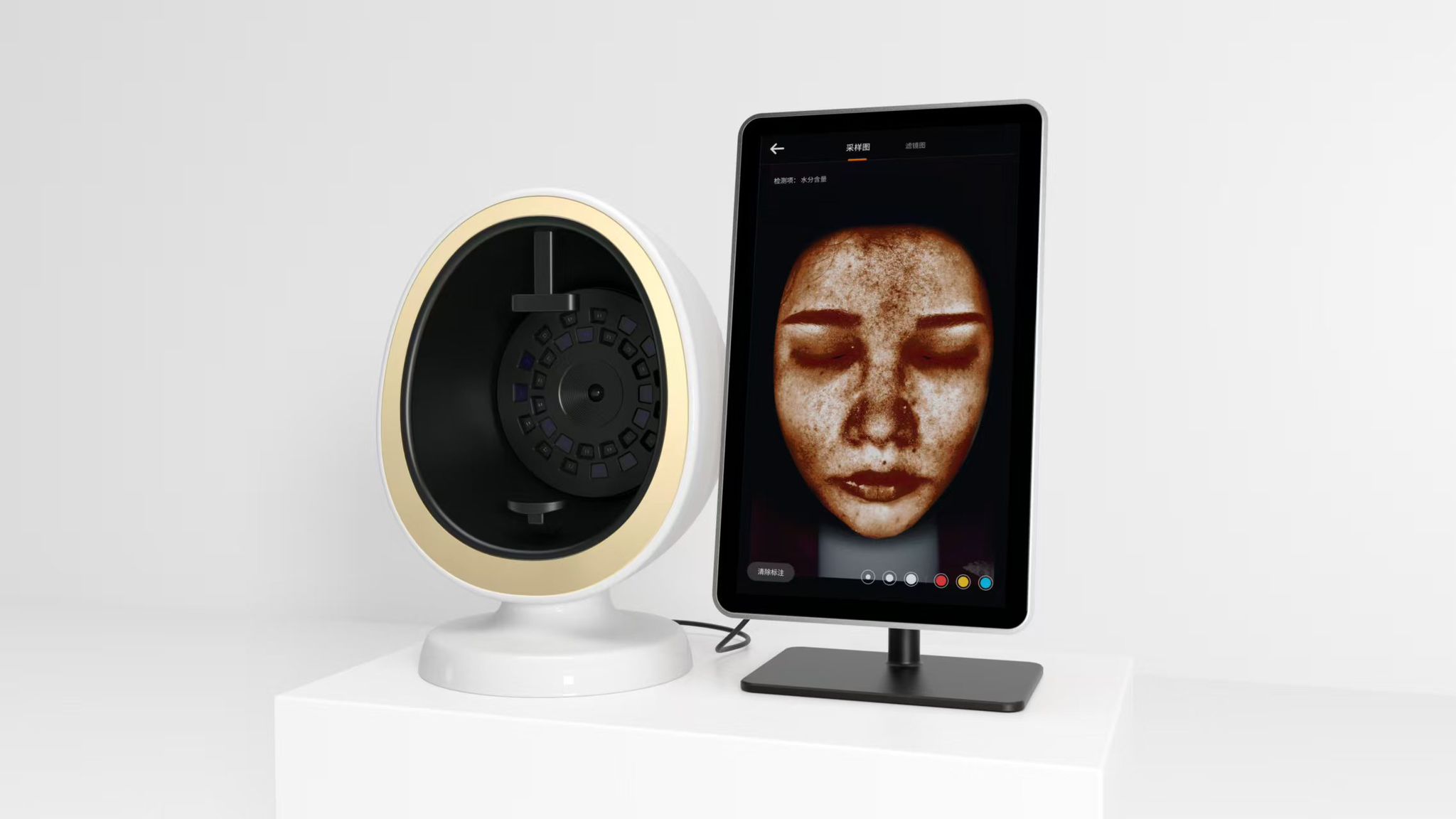
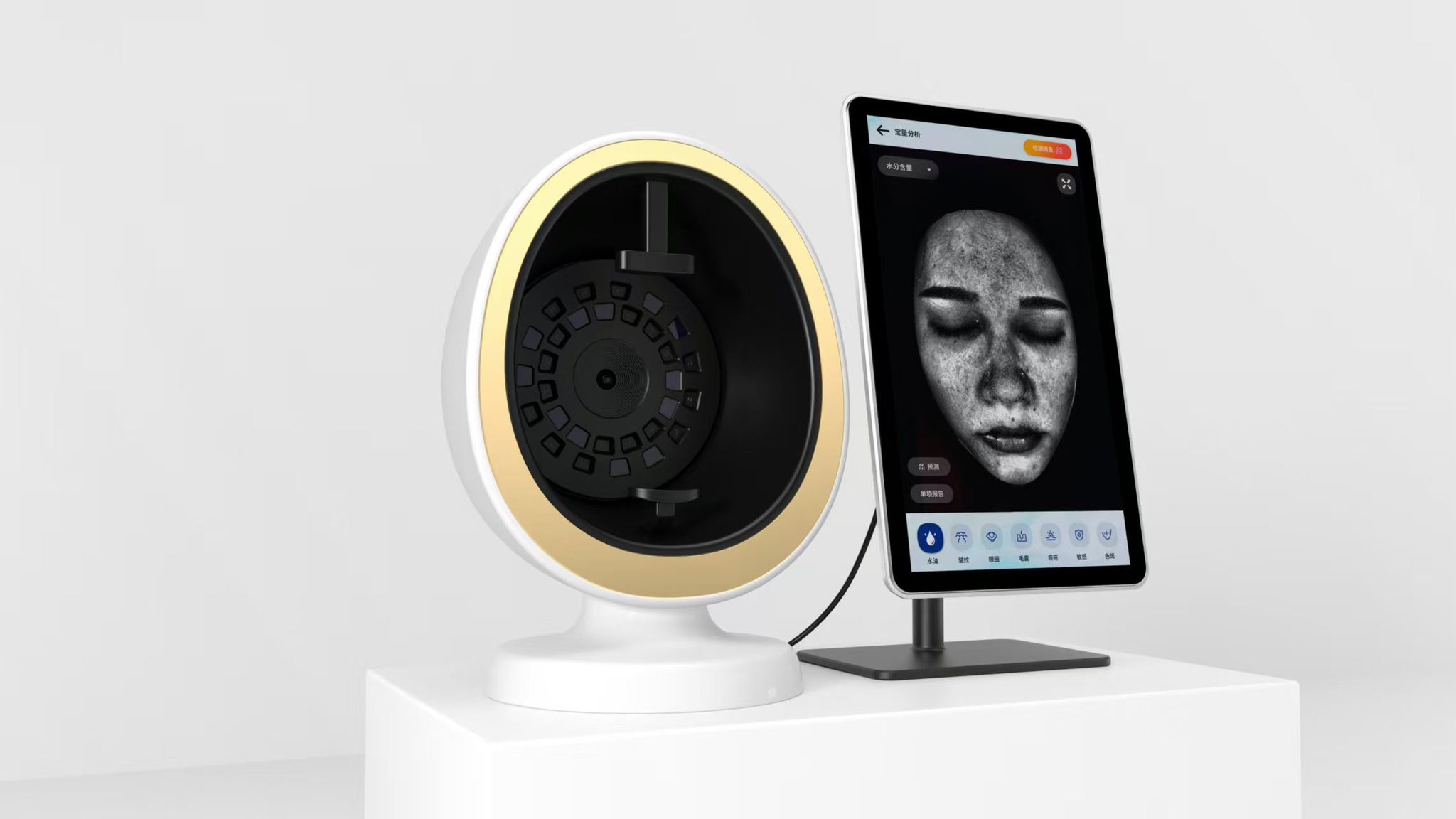
Facial Analyzer with Skin Test and Artificial Intelligence
is a state-of-the-art facial analysis device.
It was created to provide the most precise and detailed skin analysis at the epidermis and dermis level.
With the help of computerized facial analysis, we identify problems that will appear on the face in advance: melasma, pigment spots, couperose, wrinkles, and more.
Original price was: €5,000.00.€4,165.00Current price is: €4,165.00.
Available on backorder
Description
Facial Analyzer with Skin Test and Artificial Intelligence
Facial Analyzer with Skin Test and AI is a state-of-the-art facial analysis device. It was created to provide the most precise and detailed skin analysis at the epidermis and dermis level. With the help of computerized facial analysis, we identify problems that will appear on the face in advance: melasma, pigment spots, couperose, wrinkles.
Using advanced imaging technology, it can detect hidden skin problems and determine the best personalized treatments for each patient.
This device is used by skincare specialists for facial consultations, skin analysis, and treatment of skin problems including acne, wrinkles, age spots, and more.
Facial analysis is a detailed evaluation of facial skin to detect specific skin problems and determine the best treatment options. Facial analysis can be performed by skin care specialists, such as dermatologists, estheticians, or cosmetologists, using various technologies and methods.
This involves a careful examination of the facial skin, including texture, color, pores, wrinkles, age spots, acne, couperose, and other issues. After analyzing the skin, the specialist can recommend personalized treatments to address the patient’s specific concerns, as well as improve the texture and overall health of the skin.

Operating principle
The lens imported from Japan, which has 30 million HD pixels to obtain the image of the facial skin, 8 imaging spectrometry, AI face recognition technology, data analysis and detection, 3D skin simulation technology, cloud computing cloud storage, quantitative analysis of surface and deep pathological characteristics of the skin, detecting 16 kinds of skin health indicators.
The system uses infrared imaging technology to measure the moisture content of the skin’s surface. Infrared rays can penetrate the skin’s surface and directly act on the water molecules beneath it to measure the amount of water inside the skin. The system converts this data into digital images and reports so that dermatologists and estheticians can better understand the skin’s moisture status and recommend appropriate skin care.
SKIN TEXTURE
Skin texture detection
The more uneven the distribution of filter points, the more serious the skin texture.
Through the system algorithm, the collected images are processed and analyzed, and the characteristic parameters of the skin texture are extracted, such as the concavity of the skin surface, the depth of the skin lines, the glossiness of the skin, etc., so as to obtain the distribution and change trend of the skin texture. These parameters can be used to assess the health of the skin, the degree of aging and the risk of various skin problems.

SKIN WRINKLES
CIRCLES UNDER THE EYES
ACNE
BLACKHEAD ACNE
RED BLOOD CELLS

PIGMENTATION

SURFACE STAIN
DEEP POINT
- The result is guaranteed
- Service: Own repair center
- Free training
- Specialization diploma
- Free shipping
Additional information
| Weight | 8 kg |
|---|
Related products
-
-
Add to cart

- BEAUTY, BODY REMODELING, CAVITATION/LIPOLASER, DEVICES, ENDERMOLOGY/ VACUUM, RADIO FREQUENCY, SPECIAL OFFERS
Cavitation RF Vacuum Slim Device
- Original price was: €3,535.00.€2,975.00Current price is: €2,975.00.
-
-

-

-

-

-
-
-
Add to cart

- BODY REMODELING, CRYOLIPOLYSIS, DEVICES
Cryotec 360°
- Original price was: €18,900.00.€13,999.00Current price is: €13,999.00.
-
-

-


